


I've been diving deep into AI lately, and I've got to tell you—teaching it to others has been even more rewarding than learning it myself. Just wrapped up an intensive workshop in Atlanta with 12 forward-thinking appraisers who were hungry to master this game-changing technology. Most of these appraisers were not clients of mine. The questions, the breakthroughs, the "aha" moments—pure gold! It's refreshing to see our profession embracing innovation rather than running from it.


Let's talk about something that's been a complete game-changer in my business—and I'm betting it will be in yours too. I'm talking about mastering the art of prompting AI tools like ChatGPT, Grok, and other large language models (LLMs). But here's the kicker: most appraisers are using these incredible tools like they're Google. They're asking simple questions and getting mediocre answers, then wondering why AI isn't living up to the hype.
Stop right there. You're doing it wrong!
Think about it this way: when you're training a new assistant appraiser, you don't just say "go appraise that house." You give context, explain your methodology, share your expectations, and provide examples. AI is no different—except it's infinitely more powerful when you know how to communicate with it properly.
Here's what I've learned from working with hundreds of appraisers and countless hours of experimentation: the difference between a Google-style query and a professional prompt is like the difference between a desktop BPO and a comprehensive appraisal report. One gives you surface-level information; the other gives you actionable intelligence.
Let me break down my five-step prompting framework that's revolutionized how I use AI in my appraisal practice.

Step One: Set the context and role. Don't just ask AI a question—tell it who it is and what situation you're dealing with. Instead of "How do I adjust for a pool?" try this: "You are an experienced residential appraiser with 20 years in the field. I'm appraising a 2,400 square foot ranch home built in 1985 in a suburban neighborhood where pools are uncommon. The subject has an in-ground pool installed in 2018, and I need to determine the appropriate adjustment."
See the difference? You've given the AI a professional identity, specific property details, and market context. Now it can think like an appraiser, not like a search engine.
Step Two: Provide specific details. This is where most people fall short. They're vague, and vague inputs get vague outputs. Be surgical with your details. "I have three comparable sales: Comp 1 sold for $385,000 with no pool, Comp 2 sold for $385,000 with no pool, Comp 2 sold for $385,000 with no pool, Comp 2 sold for $392,000 with an above-ground pool, and Comp 3 sold for $398,000 with an in-ground pool similar to the subject. All sales occurred within the last six months and are within 0.5 miles of the subject property."
The more specific you are, the more tailored and useful the response becomes. AI thrives on details—feed it well.
Step Three: Define your desired output format. Here's where the magic happens. Don't just ask for an answer—ask for the answer in the exact format you need. "Please provide your analysis in three parts: 1) A market-based adjustment recommendation with supporting rationale, 2) A list of additional factors I should consider, and 3) Suggested language for my appraisal report that explains this adjustment to the client."
This isn't just about getting information; it's about getting information you can immediately use in your work.
Step Four: Request multiple perspectives. One of AI's superpowers is its ability to consider multiple viewpoints simultaneously. Leverage this: "Analyze this adjustment from three perspectives: conservative (minimal pool value), moderate (typical market response), and aggressive (maximum contributory value). Explain the market conditions where each approach would be most appropriate."
This gives you a range of professional opinions to consider, just like consulting with multiple experienced appraisers.
Step Five: Ask for verification and next steps. End your prompts by asking AI to help you validate its recommendations: "What additional market data should I research to support this adjustment? What red flags should I watch for that might indicate this adjustment is inappropriate? What questions should I ask the listing agent or homeowner to gather more relevant information? What other questions should I be asking that I am blind to?"
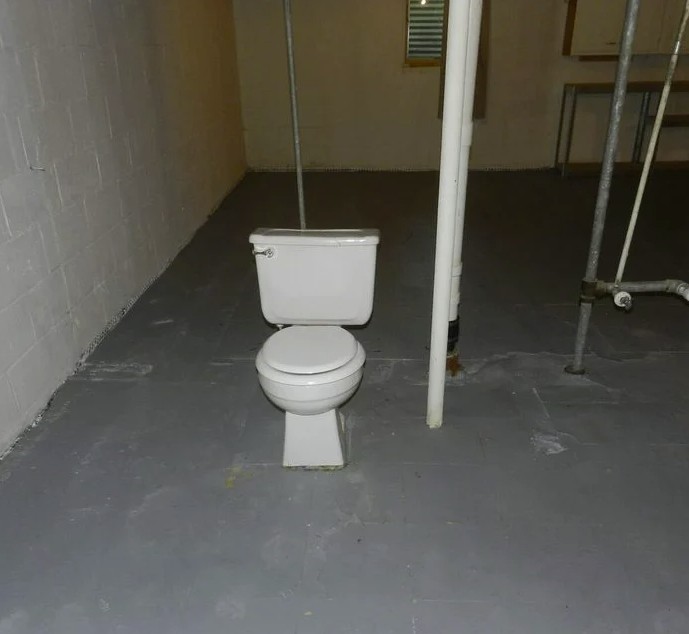
Basement 2% finished
This turns AI from a simple answer machine into a strategic thinking partner.
Let me give you a real-world example from last week. I was dealing with a unique property—a converted barn in a rural area. Instead of asking "How do I appraise a converted barn?" I used my framework:
"You are a certified residential appraiser specializing in unique and rural properties. I'm appraising a 3,210 square foot converted barn residence built in 1890, converted to residential use in 2015. The property sits on 5 acres in a rural area where most homes are traditional construction on 1-2 acre lots. Recent sales include mostly conventional homes ranging from $450,000 to $650,000. I need to develop a comprehensive approach for this assignment.
Please provide: 1) A step-by-step methodology for approaching this unique property type, 2) Specific comparable sale criteria I should prioritize, 3) Potential adjustment categories I should consider, 4) Risk factors I should address in my report, and 5) Additional research sources that might provide relevant market data for converted agricultural buildings."
The response was incredible—detailed, professional, and immediately actionable. It suggested researching agricultural-to-residential conversion trends, looking at sales data from neighboring counties with similar properties, considering the cost approach more heavily due to the unique nature, and even provided specific language for addressing the property's uniqueness in my report.
But here's the real secret sauce: iteration. Don't stop at the first response. Follow up with clarifying questions, ask for examples, request alternative approaches. "Can you provide specific language for explaining the conversion quality to a lender?" or "What if the comparable sales show a wide range of values—how should I address this in my reconciliation?"
The key is treating AI like your most knowledgeable colleague—one who never gets tired of your questions and always has time to think through complex problems with you.
I've been using this approach for months now, and it's transformed everything from my market analysis to my report writing. My reports are more thorough, my adjustments are better supported, and I'm catching potential issues before they become problems. I am using AI on nearly every report I write up these days.
The appraisers in my Atlanta workshop were blown away when they saw the difference between their old "Google-style" questions and these professional prompts. One participant who has been using AI for over a year said it was like upgrading from a flip phone to a smartphone—same basic function, but exponentially more powerful.
Stop using AI like a search engine. Start using it like the professional tool it can be. Your clients, your reports, and your bottom line will thank you.

Point #1: Perplexity. If you're diving into AI but worried about accuracy and citations, meet your new best friend: Perplexity AI. Unlike ChatGPT, which can sometimes hallucinate facts, Perplexity provides real-time web search results with actual source citations. The free version is solid by the way. I do not pay for the upgrade - yet.
Point #2: Muck Boots. Here's a simple tip that's saved me countless times: keep a pair of waterproof muck boots in your trunk. You never know when you'll encounter a muddy yard, flooded basement, or construction site that requires an inspection. Last month, I showed up to what looked like a normal suburban home, only to find the backyard was a swamp from recent landscaping work. Cheap insurance for professional credibility.

Summer's here, interest rates are dropping (fingers crossed), and I can already see it happening—appraisers everywhere are getting comfortable. The phone's ringing, the pipeline's full, and suddenly marketing feels like something you can put on the back burner. "I'll get back to it when things slow down," they tell themselves.
Stop. Right. There!
This is exactly when your competition is making the same mistake, and it's exactly when you should be doubling down on marketing. While everyone else is heads-down, grinding through AMC work at razor-thin margins, you should be building the private client base that will sustain you when the market inevitably shifts.
Here's the brutal truth: if you're only marketing when you're desperate for work, you're always going to be at the mercy of whoever's willing to throw you scraps. Lenders, AMCs, whoever. You become a commodity, competing on price instead of value. That's not a business—that's a job with extra steps.
But when you market consistently, especially during busy periods, you're building something different. You're creating a pipeline of high-value, private clients who see you as the expert, not just another appraiser on a panel.
Let me tell you what I see happening right now in markets across the country. Interest rates have dropped slightly from their peaks, refinances are picking up, and purchase activity is steady. Every appraiser I know is busy. And every single one of them has stopped marketing.
Meanwhile, I'm still getting calls from estate attorneys, divorce lawyers, private buyers, regular-Joe and Jane homeowners, and high-net-worth individuals who need appraisals for non-lending purposes. Why? Because I never stopped marketing to them, even when I was swamped with lender work.
Here's my summer marketing strategy—and it's specifically designed for busy appraisers who think they don't have time to market:
The 15-Minute Daily Touch Every morning, before you check your first email, spend 15 minutes on marketing. That's it. Not an hour, not a morning—15 minutes. You might send a LinkedIn message to a local attorney, comment on a real estate agent's social media post, or send a quick email to a past private client checking in on their property.
Fifteen minutes doesn't sound like much, but it compounds. That's 75 minutes a week, 300 minutes a month. Over a year, that's 91 hours of consistent marketing while your competition does zero.
Here’s the strategy in a nutshell, when you're busy, you have leverage. Use it. When a potential private client calls and you're booked solid, don't just say "I'm busy." Say this: "I'm completely booked for the next three weeks because of the current market activity, but I'd love to help you. Can we schedule your appraisal for [specific date]? I'll put you on my priority list and call you immediately if anything opens up sooner."
This does three things: it demonstrates your value (you're in demand), it secures future work, and it keeps you top-of-mind for their next need.
Busy periods are perfect for generating referrals because your service quality is being tested under pressure. Every satisfied client during a busy period is worth three referrals during slow periods. But you have to ask.

After completing a private appraisal, I send this follow-up: "Thanks for choosing me for your appraisal needs during this busy market. I know you had options, and I appreciate your patience with scheduling. If you know anyone else who needs professional appraisal services, I'd be honored to help them with the same level of service you received." And of course, I also ask for a five star review on Google.
Here’s another hack; you're doing appraisals anyway—turn them into marketing content. Obviously, you can't share specific details, but you can share insights. "Just completed an appraisal in [neighborhood] and noticed an interesting trend in pool values..." or "Working on an estate appraisal reminded me why it's crucial to have current appraisals for insurance purposes..." This positions you as the local expert while requiring minimal additional effort. Repurpose your content!
While you're busy, your competition is getting lazy with their marketing (they are busy too and do not care about the hard work of marketing). This is the perfect time to see what they're not doing and fill those gaps. Check their websites, social media, Google reviews. Where are they weak? That's your opportunity.
I recently picked up three new attorney clients simply because I was the only appraiser who responded to their LinkedIn posts about market conditions. Everyone else was too busy to engage.
The Long-Term Vision Remember, the goal isn't just to stay busy—it's to build a business that works for you, not the other way around. Every private client you land during busy periods is a client who might need you again during slow periods. Every relationship you build now is a referral source for the future.
The appraisers who thrive long-term aren't the ones who work the hardest during busy periods—they're the ones who work the smartest. They use busy periods to build the foundation for sustained success.

Don't fall into the trap of thinking marketing is something you do when you need work. Marketing is something you do to ensure you never need work. There's a difference, and that difference is what separates successful appraisal businesses from appraisers who are always one market shift away from scrambling.
Your competition is getting comfortable right now. While they're focused on the work in front of them, you should be building the business around you. Summer marketing isn't about immediate results—it's about positioning yourself for long-term success while everyone else is playing short-term games.