


Happy New Year! This is the time when everyone is talking about resolutions, but I want to challenge you to think differently. Instead of making vague promises that you'll forget by February, let's talk about setting a real vision for 2026 and breaking it down into actionable steps.
What do you want your business and your life to look like by the end of this year? What are the key performance indicators—the KPIs—that will tell you you're on the right track? This isn't just about making more money or working fewer hours. It's about designing a business that serves your life, not the other way around. It's about taking the small, consistent steps that lead to massive long-term results.
If you're a member of the All-Star Team and you've been thinking about taking your business to the next level, maybe 2026 is the year to bump it up and finally move into the Dream Team Mastermind. The Mastermind is where we dive deep into these concepts and hold each other accountable for making real progress. Let's make this year count.

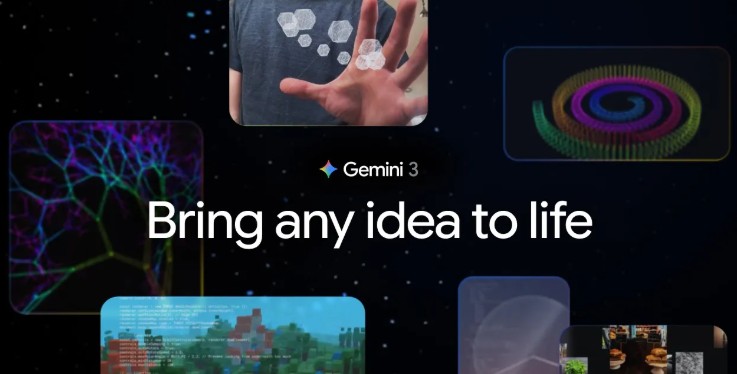
Let's talk about Google's Gemini 3, which launched in November 2025. If you've been following the AI space, you know that for a long time, OpenAI's ChatGPT was the undisputed king. But Gemini 3 has completely changed the game. It has blown all of the other LLMs out of the water, winning benchmark after benchmark and setting a new standard for what's possible with artificial intelligence.
I'll be honest—I have disliked OpenAI and ChatGPT ever since I tried Gemini 3. The difference in performance is that significant. Now, I'm still using ChatGPT for some things because it has three years of my history and my memories stored in it, so it knows me. Anything personal or having to do with business decisions that I've talked to it about in the past, I'm still using ChatGPT for that context and continuity. But for almost everything else—research, analysis, problem-solving, report review, market analysis—I'm using Gemini 3.
If I'm advising new users of AI, I'm encouraging them to start with Google Gemini rather than ChatGPT. The learning curve is similar, but the power and accuracy you get with Gemini 3 are on a completely different level. It's faster, more accurate, and provides more comprehensive answers with better reasoning. The integration with Google's ecosystem also makes it incredibly powerful for research and data analysis, which is exactly what we need as appraisers.

In the benchmarks, Gemini 3 Pro hit 81% on visual reasoning tasks, beating GPT-5.1 at 76% and Claude Opus 4.5 at 72%. It completely dominates in video understanding, which could be huge for appraisers who need to analyze property videos or virtual tours. The model excels at zero-shot generation and multi-step planning, which means it can handle complex appraisal scenarios without needing extensive examples or hand-holding.
One of the most impressive features is its exceptional instruction following and improved tool use. This means when you ask it to do something specific—like analyze a market trend, review comparable sales, or identify potential red flags in a report—it actually does what you ask with remarkable accuracy. The agentic coding capabilities mean it can help you automate repetitive tasks in your appraisal workflow.
Google has also introduced new features like visual layouts in Google Labs, where Gemini 3 can create visual representations of data and answers. There's a dynamic view feature and a Gemini Agent that can perform multi-step tasks autonomously. For appraisers, this could mean asking it to research a neighborhood, pull demographic data, analyze recent sales, and present it all in a coherent format—all from a single prompt.
The practical applications for appraisers are extensive. You can use Gemini 3 to analyze market trends by feeding it sales data and asking for patterns. You can have it review your appraisal reports for consistency, logic errors, or missing information. You can ask it to help you understand complex zoning regulations or building codes. You can use it to draft client communications or marketing materials. The possibilities are nearly endless.
What really sets Gemini 3 apart is its ability to maintain context over long conversations and handle multiple related tasks in sequence. You can start by asking it to research a neighborhood, then ask follow-up questions about specific properties, then have it compare those properties to others in different areas, all while maintaining the thread of the conversation. This kind of contextual understanding is exactly what makes it so powerful for professional work.
The cost is also significantly better than ChatGPT. Gemini 3 Flash is roughly 25 times cheaper than GPT-4o for both input and output tokens, which means if you're doing a lot of AI-assisted work, the savings add up quickly. And you're getting better results for less money, which is always a win.

Definitely a dog lover
This isn't just about which model is better on paper—it's about using the best tool for the job. And right now, for most appraisal-related tasks, that tool is Gemini 3. The combination of superior reasoning, better integration with research tools, more accurate responses, and lower cost makes it the clear choice for professional work. OpenAI is freaking the heck out right now. If you haven't tried Gemini 3 yet, I strongly encourage you to give it a shot. You might find, like I did, that it completely changes how you approach AI-assisted work. The time you save and the quality improvements you'll see in your work will more than justify the small learning curve of switching platforms.

Point #1: Gemini 3
As talked about above, Google's Gemini 3 is a complete game-changer for appraisers. Released in November 2025, it outperforms ChatGPT and Claude in virtually every benchmark that matters for our work. The visual reasoning capabilities are exceptional, scoring 81% compared to GPT's 76%. For analyzing property photos, reviewing comps, and understanding market data, it's simply the best tool available right now. If you're serious about integrating AI into your practice, Gemini 3 should be considered for your primary tool. The combination of superior accuracy, better reasoning, seamless Google integration, and significantly lower cost makes it perfect for appraisal work.
Point #2: Sora 2
OpenAI's Sora 2 is a video generation tool that creates stunningly realistic video clips from text prompts and can now generate synced audio as well. While it might seem disconnected from appraisal work at first, think about the marketing possibilities. Imagine creating property tour videos, neighborhood overview videos, or even educational content for clients—all generated from simple descriptions and a few photos. It's not ready for professional appraisal reports yet, but for marketing your services and explaining complex concepts to clients, it's an incredibly powerful tool that's only going to get better with time.

I want to share a brilliant marketing strategy from Tony Blackburn, one of our Dream Team Mastermind members (with his permission, of course). He scours his MLS for agents that handle estate sales and reaches out to them to find out if they have appraisal representation yet. Usually, they already do, but it sets him up perfectly for the next time they need an appraiser. This is proactive marketing at its finest, and it's exactly the kind of strategic thinking that separates successful appraisers from those who are always struggling to find work.
Here's exactly how it works: in your MLS, there's typically a field for "Type of Sale," and one of the selections is "Estate." For Realtors who don't fill that field out or describe it otherwise, you can search the Agent Only comments section for the term "Estate." This gives you a comprehensive list of agents who are actively working with estate sales in your market. The beauty of this approach is that it's systematic and repeatable—you're not relying on chance encounters or hoping someone remembers you.
Once you have that list, you reach out with a professional, helpful email. Tony has a template that he uses to introduce himself and ask if they need a DOD—Date of Death—appraisal for the estate. These appraisals are required for tax purposes, probate proceedings, and estate settlements, so there's almost always a need. The key is to position yourself as a resource, not just another vendor trying to get work.
This is a proactive approach that gets you in front of the right people at exactly the right time. Estate sales almost always require an appraisal for tax purposes, probate, or to facilitate the sale among heirs. By reaching out early in the process, you position yourself as a helpful resource and a go-to expert in this specific niche. You're not waiting for them to figure out they need an appraiser—you're educating them and making their job easier. In fact, Tony told me he also creates blog posts around the subject that are helpful to estate agents. That will establish you as the known expert on the topic locally.
Even if the agent already has an appraiser they work with for estates, you've made a valuable connection and planted a seed for the future. The next time they have an estate sale, or if their current appraiser is unavailable or slow to respond, guess who they're going to think of? You'll be top of mind because you took the initiative to reach out and demonstrate your expertise in this area.
This is exactly how you build a sustainable appraisal business—by creating a pipeline of potential clients rather than just sitting around waiting for the phone to ring. You're being strategic about the types of work you pursue, and you're positioning yourself as a specialist in a valuable niche. Estate appraisals often pay better than standard residential work, and the clients—attorneys, executors, and estate-handling agents—tend to be more professional and easier to work with.
The key is consistency. Don't just do this once and forget about it. Make it a monthly habit to search your MLS for new estate listings and reach out to those agents. Build relationships, follow up, and stay top of mind. That's how you turn a good idea into a reliable source of business that generates consistent income year after year.

Last month, I talked about the anxiety that comes with seasonal slowdowns in our business and how to reframe December as preparation time rather than panic time. This month, I want to build on that theme and talk about the other side of the coin—the opportunities that come with life's transitions and how they can actually enhance your business and your life.
As previously discussed here, I became an empty-nester in November, and I'll tell you, it came quicker than I ever anticipated. Though I always knew it was coming, and not to sound like an old fuddy-duddy, but people always say "enjoy the time with your kids while you have them because they'll be gone sooner than you know it." I can testify that this is absolutely true. One day you're teaching them to ride a bike, and what feels like five minutes later, they're moving out and starting their own lives.
But here's the positive side of this new season that I want to emphasize: I've been able to spend a great deal more time with my wife lately, and it has been absolutely wonderful. We're rediscovering what it's like to just be us again, without the constant demands and schedules of active parenting. We got married very young and began having kids within two years of marriage. So, getting to know each other is kind of renewing what we missed as young parents. One of our first trips as empty-nesters was to visit my daughter and new son-in-law in Houston, which was fantastic. A few days later, we hopped over to New Orleans for the Mastermind meeting at the beginning of December.
But here's where it gets really good—after the Mastermind ended, instead of rushing home like we would have done in the past, we spent almost an entire week just exploring New Orleans. We worked a little bit, stayed connected to our businesses, but mostly we played. We ate amazing food, listened to live music, walked through the French Quarter, and just enjoyed our newfound freedom. That's the kind of life that a well-designed business makes possible.
I'm sharing this with you because no matter what station in life you find yourself in right now—whether you're in the thick of raising young kids, caring for aging parents, or somewhere in between—you need to be looking forward to and actively preparing for retirement, whatever that looks like for you. And here's the thing: it comes sooner than you think it will.
Don't wait until you're 65 to start thinking about what you want your life to look like in this next phase. Start now. Build a business that gives you the freedom and flexibility to enjoy the moments that matter most, whether that's spending time with your kids while they're still home, traveling with your spouse when you become empty-nesters, or pursuing passion projects that you've always dreamed about.
The appraisers who thrive long-term are the ones who design their businesses intentionally with these life transitions in mind. They're not just chasing the next order or trying to survive the next slow season. They're building something sustainable that can adapt and flex with the different seasons of life.
Now go create some value.