
Click below to chat with Dustin's new AI bot!
You can also access Ask-Dustin.AI inside your Membership Library
___________________________________________________

Summer is always a strange dichotomy for us. On one hand, it's usually our busiest time of the year. The market thaws out, orders flow, and we finally get to make hay while the sun shines. On the other hand, it's the exact time our kids are out of school, the weather is perfect, and we just want to be outside enjoying it.
I want to encourage you to find that balance right now. Yes, make the money you need to make during this busy season. But do not overwhelm yourself to the point where you miss the summer entirely. Remember why we do what we do. Take the vacation. Enjoy the sunshine. The appraisals will still be there on Monday.

I want to have a real conversation with you about the future of this industry. Not the polished version. The honest one.
Here is what I know: the appraisal profession is splitting in two. On one side, you have appraisers who are paying attention, adapting, and positioning themselves for what is coming. On the other side, you have appraisers who are heads down, doing the work, and hoping things stay the same. Those two groups are heading toward very different futures.
The thing that is driving this split is AI. And I do not mean AI in the abstract, futuristic sense. I mean right now, today, in your market. The technology is not on a gradual upward slope anymore. It is accelerating faster than almost anyone predicted. Just in the last couple of years, we have watched AI go from a novelty to something that is genuinely threatening entire white-collar professions. The people running the largest tech companies in the world are openly saying that most knowledge-based work will be automated within the next couple of years. That conversation includes us.
Now, I want to be clear about something. I am not here to scare you. I am here to prepare you. Because the appraisers who understand what is actually happening right now have a real opportunity. The window to get ahead of this is still open. But it is not going to stay open.
So what does the future actually look like for our profession? Here is my honest take. The physical inspection piece will increasingly be handled by someone other than the licensed appraiser — whether that is an agent, a homeowner, a third-party inspector, or eventually some form of automated technology. The data-heavy parts of our job — pulling comps, running market trend analysis, building out adjustment grids — those are going to be AI-assisted or AI-driven. The report itself will largely be assembled by AI.
But here is the part that matters: someone still has to be responsible for it. Someone still has to review it, validate it, and put their name and license on it. That person is you. That is not going away. What is changing is the role you play in the process. You are moving from the person who does all of the work to the person who oversees the work and brings the local expertise that no algorithm can replicate.
Think about it this way. You know your market in a way that a model never will. You know the neighborhood that always runs 10% higher because of the school district. You know the subdivision where the builder used inferior materials and values reflect that. You know the street where nobody wants to live because of the commercial development next door. That local, human knowledge is your competitive advantage. Protect it. Build it. Market it.
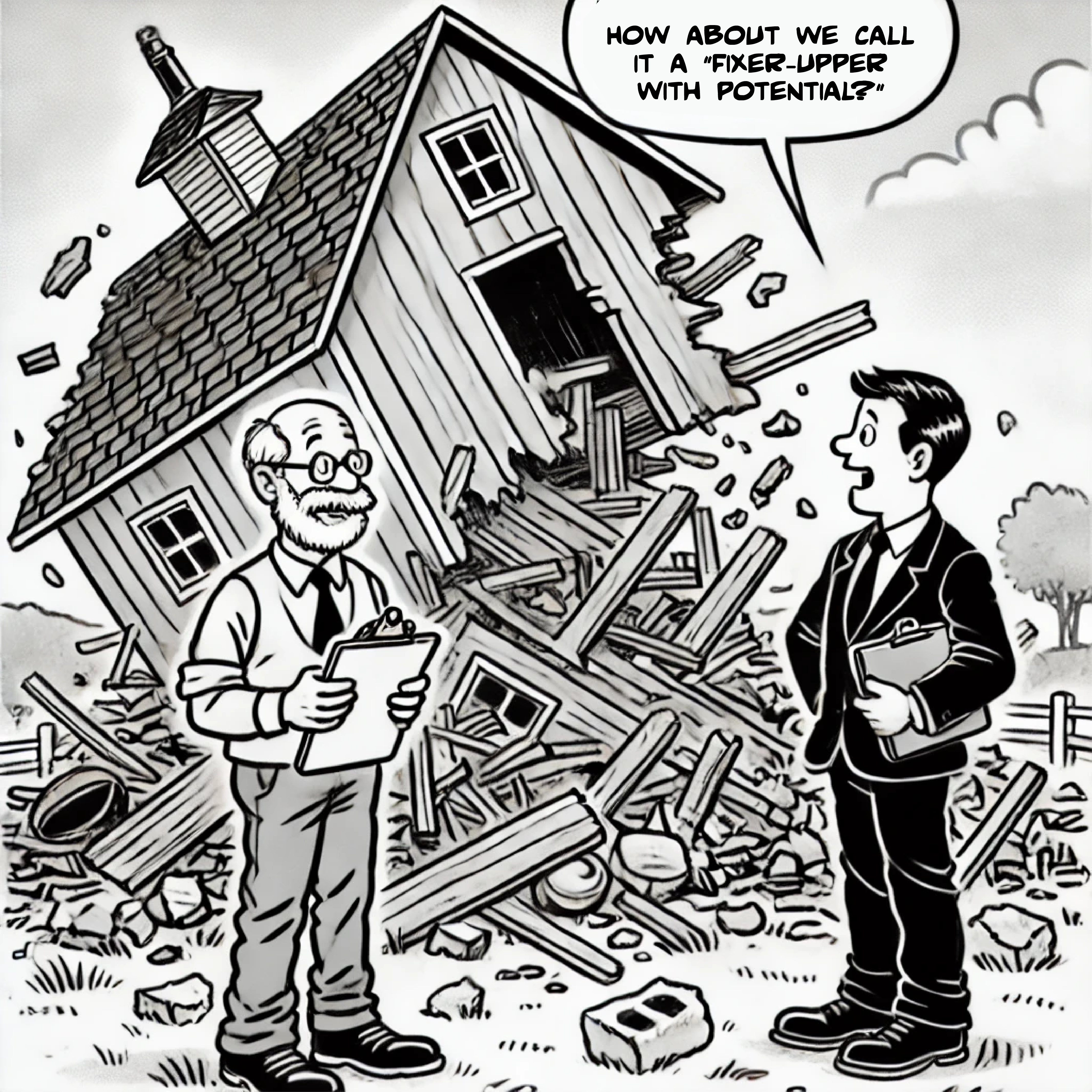
The appraisers who are going to struggle are the ones competing purely on volume and turnaround time. If your entire value proposition is that you are fast and cheap, AI is going to beat you at that game. The appraisers who are going to thrive are the ones who are building a real local reputation, integrating AI into their workflow now so they are not learning it under pressure later, and positioning themselves as the expert — not just the order-taker.
We covered all of this in depth at the June 16th monthly coaching session. If you were there, you know what I mean. If you missed it, go back and watch the replay. It is one of the more important conversations we have had this year.
The bottom line is this: the profession is changing whether we want it to or not. The only question is whether you are going to be one of the appraisers who shapes that change or one of the appraisers who gets shaped by it.
A few things still protect us right now: complex properties with no comparable data, rural markets where AI lacks information, long-standing local relationships, and regulation requiring a licensed signature. Those protections are real — but not permanent. The regulatory environment is already shifting, and the technology is closing the gap faster than most people expected.
So what do you do? Start now. Get into the tools. Learn how AI can help you work faster and smarter. Build your local brand so you are known as the go-to expert in your specific market. Stop competing on price and start competing on value. The appraisers who win in the next five years are the ones already working on it today.

I want to talk about my personal AI setup. I left Open Claw, decided against Hermes, and built my own personal AI system using Claude Code. But here is the key: it is not tied to Claude. It is completely model-agnostic.
What I built is essentially a personal knowledge base—my own personal Open Claw, or a "second brain." The system puts memory files on my local computer, mirrors them to GitHub, and syncs them to Google Drive. Because the files live in these accessible locations, I can use Claude Code or Claude Chat in the morning, switch to Gemini in the afternoon, and the AI still has full context of who I am and what I'm working on. I have my own personal AI attached to me no matter where I go, whether I'm on my laptop at the office or on my phone in the field.
I interact with this system primarily through Telegram. It acts like a true personal AI agent. It reminds me of open loops, I can talk to it throughout the day when I have random ideas, and it even gives me a daily brief.
I used Claude Code to build the system, and it's also part of how I run it day-to-day. I communicate with it often through Claude Code. Let me give you a practical example of how this actually works in the real world.
Let's say I'm in a mastermind meeting, and someone mentions a brilliant strategy they are using in their business. It sparks an idea for something I could implement in my own business, but I am in the middle of the meeting and don't have time to deal with it right now. I simply pull out my phone, open Telegram, and tell my AI agent about the idea.
The system knows exactly where to categorize that idea and under which specific business it belongs. It files it away in my synced knowledge base. Then, maybe a couple of weeks later, the AI will proactively bring it up during my daily brief and say, "Hey, you had this idea during the mastermind meeting. Do you want to focus on this now?"
It is a game-changer. It means I never lose a good idea, and I don't have to rely on my own memory to circle back to it. By keeping the system agnostic and syncing the memory files across platforms, I'm not locked into whatever AI model happens to be winning the benchmark tests this week. I can use the best tool for the job, and my second brain comes with me. If you haven't started building your own second brain yet, now is the time to start experimenting. It takes some initial setup, but the return on investment for your productivity and peace of mind is massive.

Point #1: Full Self-Driving Tesla
I recently bought a full self-driving Tesla. I'm a big fan of Tesla and thought I knew a lot about them, but I was absolutely blown away by the actual day-to-day experience of Full Self-Driving (Supervised). It is incredible technology. I am really looking forward to the day when we get to Full Self-Driving (Unsupervised).
Point #2: Voice Agents for Your Phone
I use Go High Level, but there are many platforms out there to create a knowledge base and a friendly AI voice agent. Instead of sending clients to voicemail, your phones can be answered by an AI agent that can handle about 90% of what your front office would normally handle. It's a massive time-saver.

I find myself more and more, as I get older, focusing on the things that really matter. When I get pulled into a deep cave with AI or other massive projects, I find myself unbalanced and unhappy. I'm reminded of how my clients often feel when they come to me for assistance, and I have to remind myself that I am a leader, not a follower.
As a leader, I need to walk the walk. That means I must continually adjust my life to make sure I have a good balance of hard work and clean fun. It is so easy to get caught up in the grind, especially when the market is busy or when there is a shiny new technology to learn. But if we aren't careful, we can lose sight of why we started working for ourselves in the first place. We didn't become appraisers just to stare at screens all day and night.
I find myself often out on my back deck enjoying the sunshine during the day and the fire table at night. I find myself on most weekends out on my dirt bike, feeling the wind and disconnecting from the digital world. This time of year it may not be skydiving or getting the Nobel Prize, but I feel like I live a pretty charmed life. And that charmed life doesn't happen by accident; it happens by intentional design and constant course correction.

Take a look at your own life right now. Where are you at? Do you find yourself unbalanced? Are you working too many hours and missing out on the summer? If so, what do you need to do to tweak that and put it in the right lane now? Don't wait until the busy season is over to start living your life. Make the adjustments today. Find your balance.
Now, go create some value!